
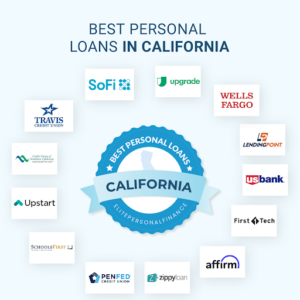
That is where most people get stuck. You walk into a branch or open a laptop, and suddenly the mix of interest rates and term lengths feels like a math problem you never studied for. If you live in California, you aren’t just dealing with one type of lender. You’re looking at a messy mix of credit unions, national banks, and specialized fintech firms.
Your financial goals actually dictate which door you knock on first. A person trying to fix a leaking roof in San Diego has different needs than a professional in San Francisco looking to consolidate high-interest credit card debt. One needs speed and low collateral requirements; the other needs a long-term, fixed-rate structure that actually lowers their monthly outflow.
California’s market is dense because the state’s economy is so diverse. You have massive tech-driven lenders competing with hyper-local credit unions. This competition is good for you, but it makes the decision-making process a bit of a headache if you don’t know what to look for in the fine print.
Decoding the Different Loan Structures Available to You
When you start browsing, you will see terms like “unsecured” and “line of credit” tossed around constantly. An unsecured loan is the most common type of personal loan you will encounter. This means you aren’t putting your car or your house on the line to get the cash.
If you go the unsecured route, you’re essentially borrowing based on your promise to pay it back, backed by your credit score and income. Because there is no collateral, the interest rates might be a bit higher than a secured loan, but the risk to your physical assets is zero. This is why many people look for unsecured loans that range from a $2,500 minimum up to $100,000 to cover large expenses.
It isn’t just about the amount, though. You have to look at how the money is delivered. A lump sum is a single check that lands in your account, which is perfect for a one-time purchase. A personal line of credit works more like a credit card. You are approved for a certain amount, and you only draw what you need, when you need it, paying interest only on what you actually use.
Lump Sum vs. Lines of Credit
- Lump Sum: Best for weddings, renovations, or debt consolidation where you know the exact cost upfront.
- Line of Credit: Better for ongoing projects or an emergency fund where you might need smaller amounts over several months.
The math changes depending on which one you pick. If you take a lump sum of $30,000 and pay it back over 60 months, you have a predictable, static monthly payment. With a line of credit, your monthly payment fluctuates because your balance changes every time you use that credit line.
The Credit Score Factor and Your Approval Odds
Not everyone enters the market with a pristine 800 credit score. A large segment of Californians are looking for ways to move forward despite a less-than-perfect financial history. If your score is dragging you down, you won’t find much luck at the big traditional banks that demand a “blue chip” profile.
Instead, you might have to look toward lenders who specialize in high-risk profiles. For instance, if you are struggling to find traction, the best personal loans in California for bad credit come from providers like Upstart, OneMain Financial, Prosper, and San Diego County Credit Union. These institutions use different data points, sometimes including your employment history or education, to determine if you are a safe bet.
But there is a trade-off. The easier a loan is to get, the more expensive it usually is. If you find yourself leaning toward an “easy approval” lender, check the APR carefully. A high APR can quickly turn a $5,000 loan into a much larger debt burden by the time you reach the end of your term.
You should also check if there is a prepayment penalty. Some lenders make their profit by charging you a fee if you try to pay the loan off early. It sounds counterintuitive, but if you get a bonus at work and want to wipe out your debt, you don’t want to be penalized for being responsible.
Comparing the Cost of Borrowing
| Lender Type | Typical Profile | Primary Advantage |
|---|---|---|
| Credit Unions | Strong credit/Local | Lower interest rates |
| Fintech/Online | Variable credit | Fast approval/Speed |
| Specialized Lenders | Bad credit | High approval odds |
Take the case of Marcus, a freelance graphic designer in Sacramento. He needed $12,000 to upgrade his workstation and software licenses. He initially applied for a standard bank loan but was rejected because his income fluctuated month-to-month. He eventually found a local credit union that looked at his year-to-date earnings rather than just a snapshot of his last two months. By choosing a lender that understood the “gig economy” reality, he secured a fixed rate that allowed him to budget accurately.
Using Debt Consolidation to Lower Your Monthly Outflow
If you are currently juggling four different credit cards, each with a different due date and a different interest rate, you are likely losing a significant amount of money to “interest creep.” This is where a personal loan becomes a tool for financial survival rather than just more debt.
Consolidation involves taking out one large personal loan to pay off all those smaller, high-interest debts. Once those cards are at zero, you only have one monthly payment to manage. The goal is to ensure the interest rate on the personal loan is significantly lower than the average rate of your credit cards.
In some parts of the state, you can find specific options for this. For example, in San Mateo County, there are options to consolidate debt with rates as low as 9.74% APR. If you can move a 24% APR credit card balance into a 9.74% APR loan, you are effectively saving hundreds of dollars every month.
But you have to be disciplined. The biggest mistake people make is consolidating their credit card debt into a loan, seeing the zero balance on their cards, and then running those cards back up again. If you do that, you haven’t solved your debt problem; you’ve doubled it by adding a personal loan on top of the new credit card balances.
How to Evaluate a Consolidation Loan
- The APR Gap: Calculate the difference between your current weighted interest rate and the new loan’s rate.
- The Term Length: A longer term makes monthly payments smaller, but you might pay more in total interest over the life of the loan.
- The Lump Sum Requirement: Ensure the lender can pay your creditors directly or provide the cash fast enough to avoid late fees.
Where to Look for the Best Terms in California
Choosing where to put your application is a tactical decision. You shouldn’t just apply everywhere at once, as each “hard inquiry” on your credit report can temporarily dip your score. Instead, target your search based on your specific financial profile.
If you have a stable job and a solid credit score, look toward credit unions. These are member-owned institutions that often provide more favorable terms than the big national banks. You might find rates as low as 12.88% APR with terms extending up to 60 months, and importantly, without the headache of prepayment penalties.
If you need cash quickly for an emergency, or if you aren’t sure exactly how much you’ll need, a personal line of credit might be your best bet. Some lenders allow you to unlock the cash you need in a lump sum or as a revolving line, giving you the flexibility to manage your own liquidity.
But don’t overlook the importance of the “easy” route if you are in a pinch. Some people find that Fast Loans California or similar quick-access options provide the necessary bridge for immediate needs, even if the long-term cost is slightly higher than a traditional credit union loan.
Lending is shifting toward more automated, data-driven decisions, which means your ability to prove your income and stability is more important than ever.
The next time you sit down to look at your finances, look at the math of the interest, not just the size of the check.
A few things readers ask
What is the best personal loan in California?
The best personal loan depends on your credit score and financial goals, but competitive rates are often found through local credit unions or online lenders like SoFi and LightStream.
Which bank is the easiest to get a personal loan with?
Online lenders often have more streamlined digital approval processes than traditional banks, making them generally easier for quick funding.
What is the easiest personal loan to get approved for?
Lenders that specialize in bad credit or no credit loans are the easiest to qualify for, though they typically come with significantly higher interest rates.
How much would a $30,000 personal loan cost per month?
A $30,000 loan might cost between $600 and $900 per month, depending on your interest rate and the repayment term chosen.
Are there specific regulations for personal loans in California?
Yes, California lenders must comply with state-specific usury laws and consumer protection regulations regarding interest rate caps and disclosure requirements.